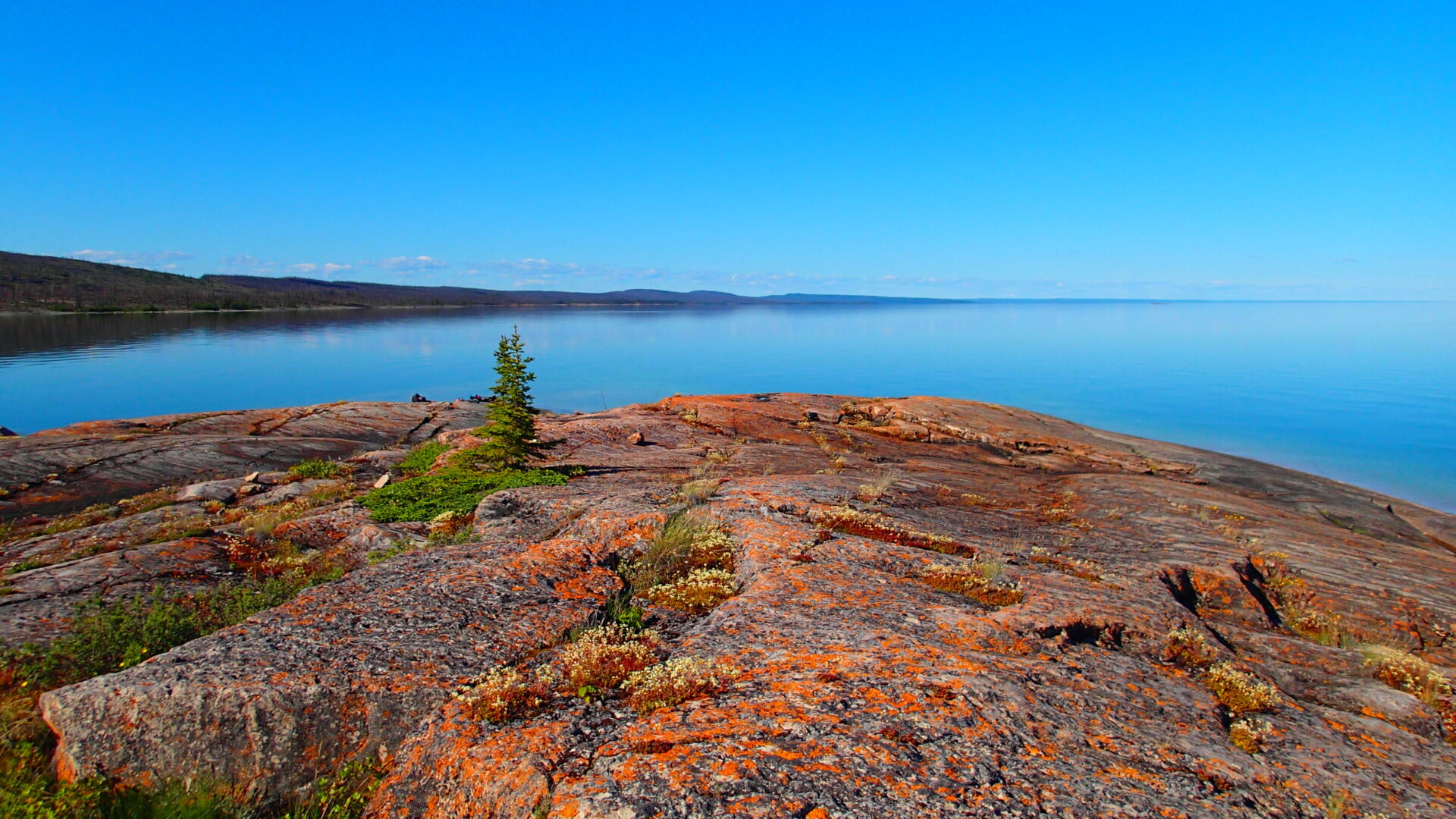
There are some places that, when visited, give a sense of preservation of time. The East Arm of Great Slave Lake does just this.
This pristine region, often referred to as the “East Arm”, is located on the great, Great Slave Lake, Canada’s deepest lake and the 10th largest lake in the world!
The East Arm spans 27,200 square kilometers and includes Canada’s newest National Park, Thaidene Nëné, as well as the Dene First Nation community, Łutselk’e.
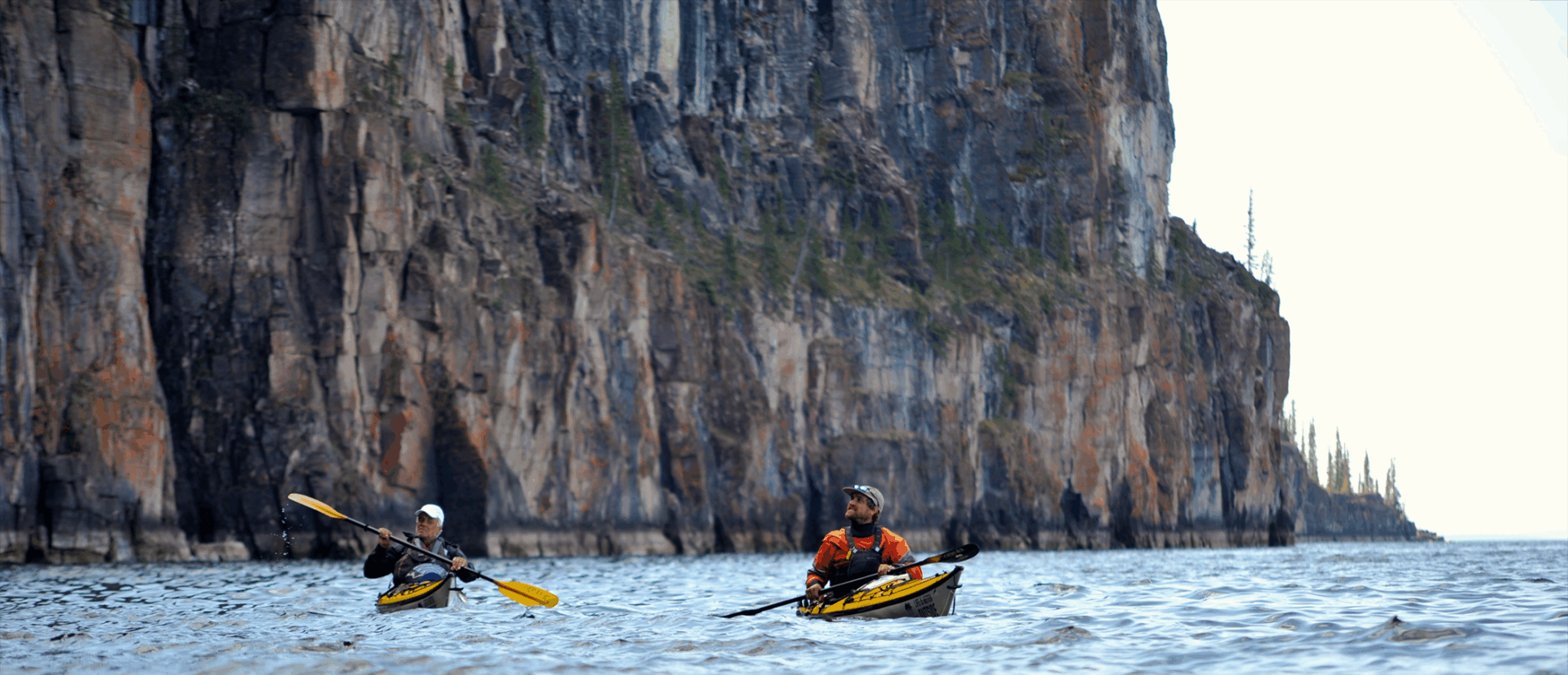
This region is known for its rugged Canadian Shield, crystal clear water filled with trophy-winning lake trout and dramatic cliffs towering over those that choose to paddle within this wild landscape. But, lesser known, is that beyond the sheer beauty, the East Arm allows travellers to hold billions of years of the Earth’s history in their hands.

The East Arm is home to some of the oldest rocks on the planet. This makes it a dream destination for those interested in geology… as well as those who simply enjoy beautiful sights!
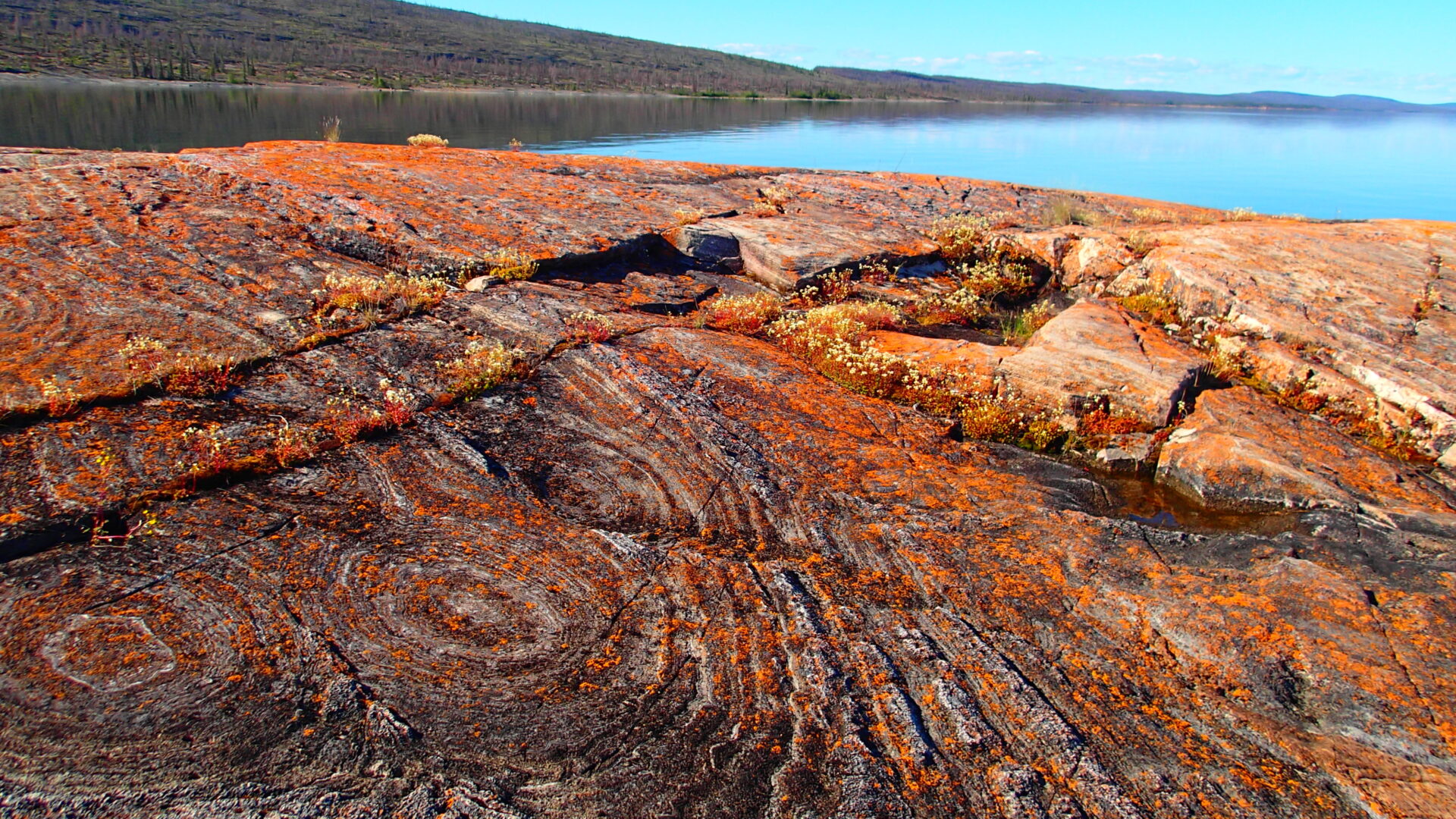
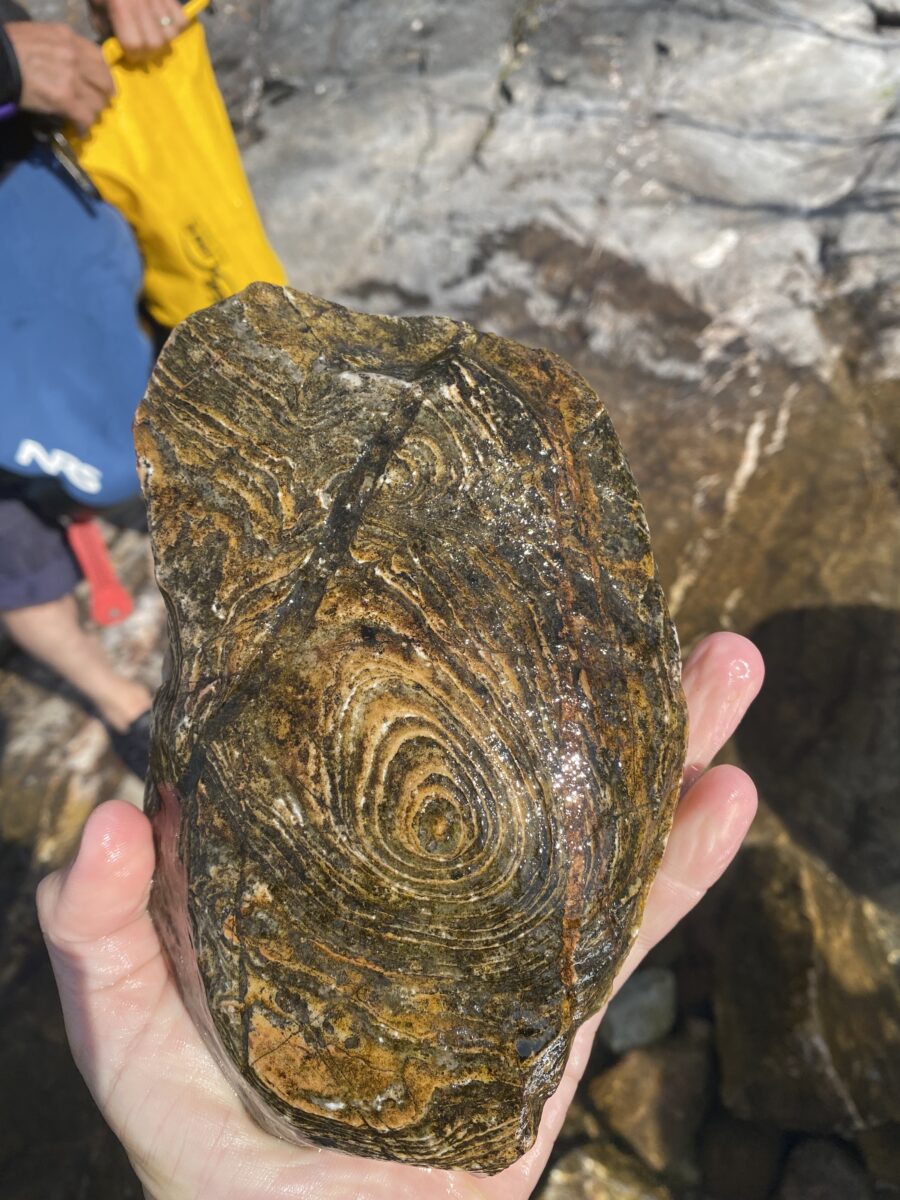
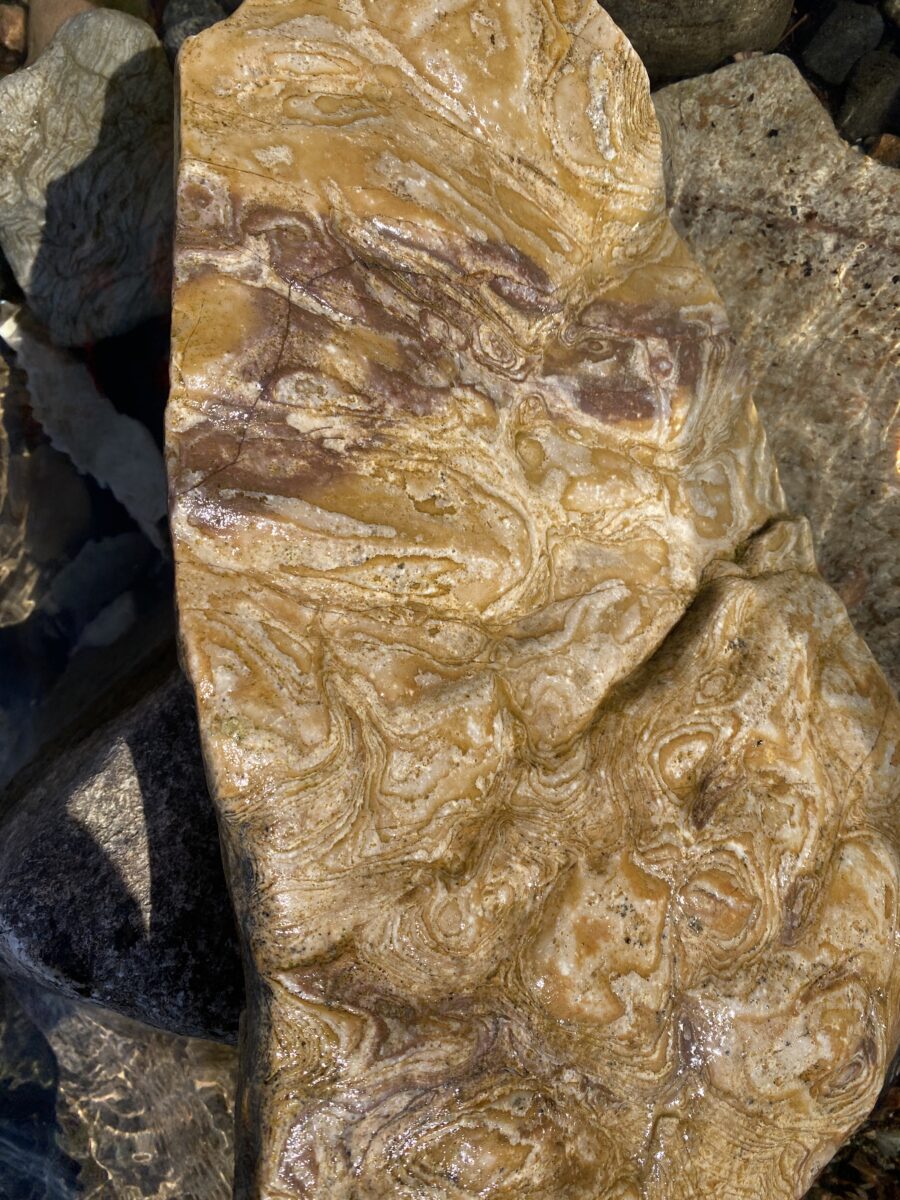
Perhaps the most fascinating rock formations, and the reason you are likely reading this, are the stromatolites. These striated and dimpled patterns found above and below the water line create a dramatic texture to the shoreline and under the hull of boats passing by. They come in variations from hand-held texturized rocks to large circular patterns spanning areas larger than a car, to symmetrically dimpled rocks that look almost human-made.
The story that these rocks hold, dates back between 500 million to 3 billion years ago when blue-green algae thrived across the earth’s landscape. These striations and dimpled rock patterns we see now, are the impressive fossils of these algae.
This region, which houses Great Slave Lake and some of the oldest dated rocks on earth, rests on what is known as the Slave Craton, one of the Earth’s oldest and most stable pieces of continental crust. This stability has preserved the wonder of the stromatolites making the East Arm one of the best places on earth to see these ancient fossils.
So why is the fossilization of this blue-green algae such an important part of the earth’s timeline?
These algae have been credited as being one of the first organisms to perform oxygenic photosynthesis – releasing oxygen as a byproduct! This shift in oxygenation was a dramatic step in our Earth’s history, often referred to as the Great Oxygenation Event. Lucky for us, this shifted the Earth’s atmosphere into a habitable place for organisms that require oxygen to live. And we, as we all know, belong in the category of organisms that require oxygen to live!
Ironically, in a great selfless act, blue-green algae created an oxygenated world that they themselves could not thrive in, leading to the decline of these wonders and leaving us only with fossils to thank.
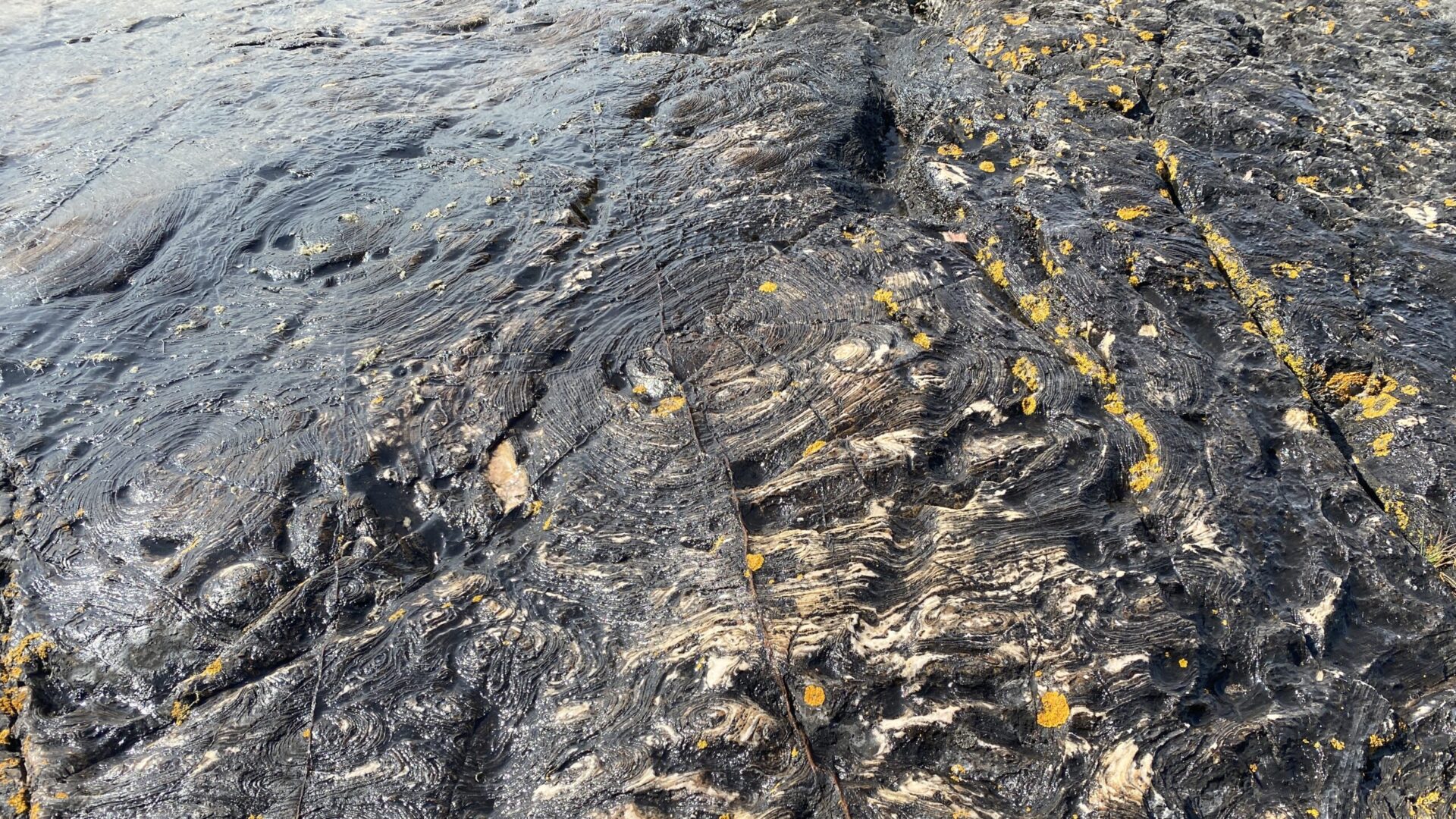
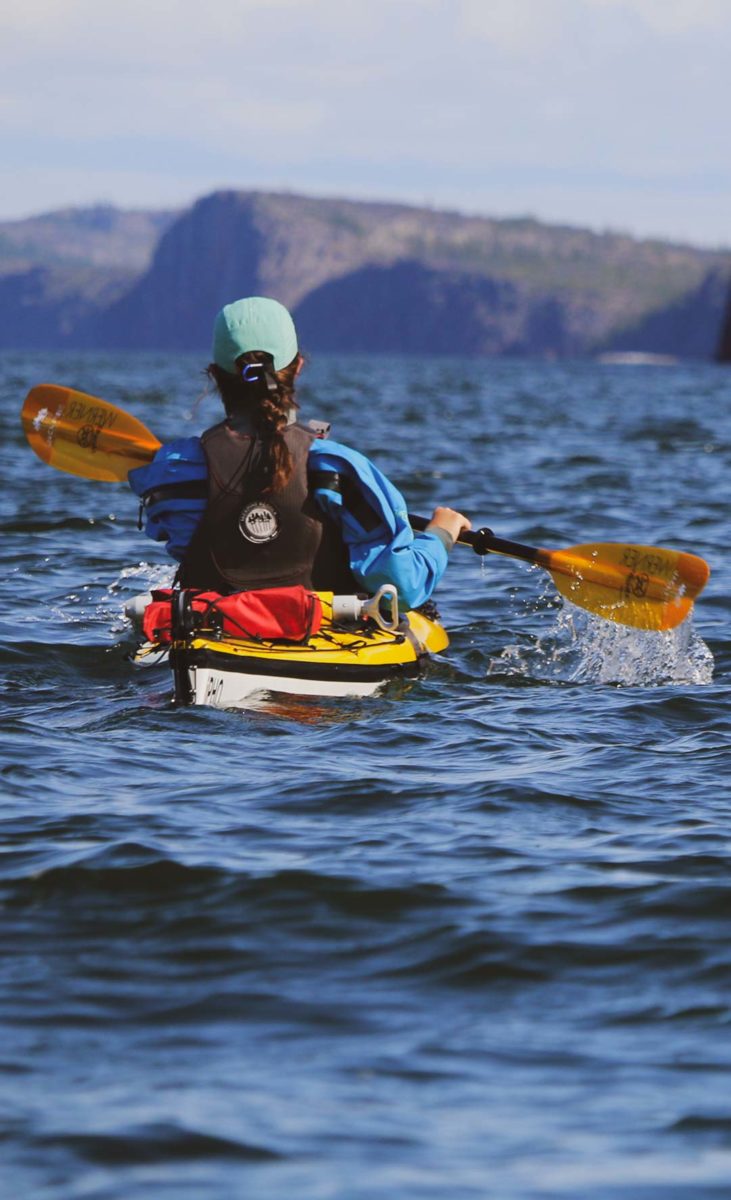
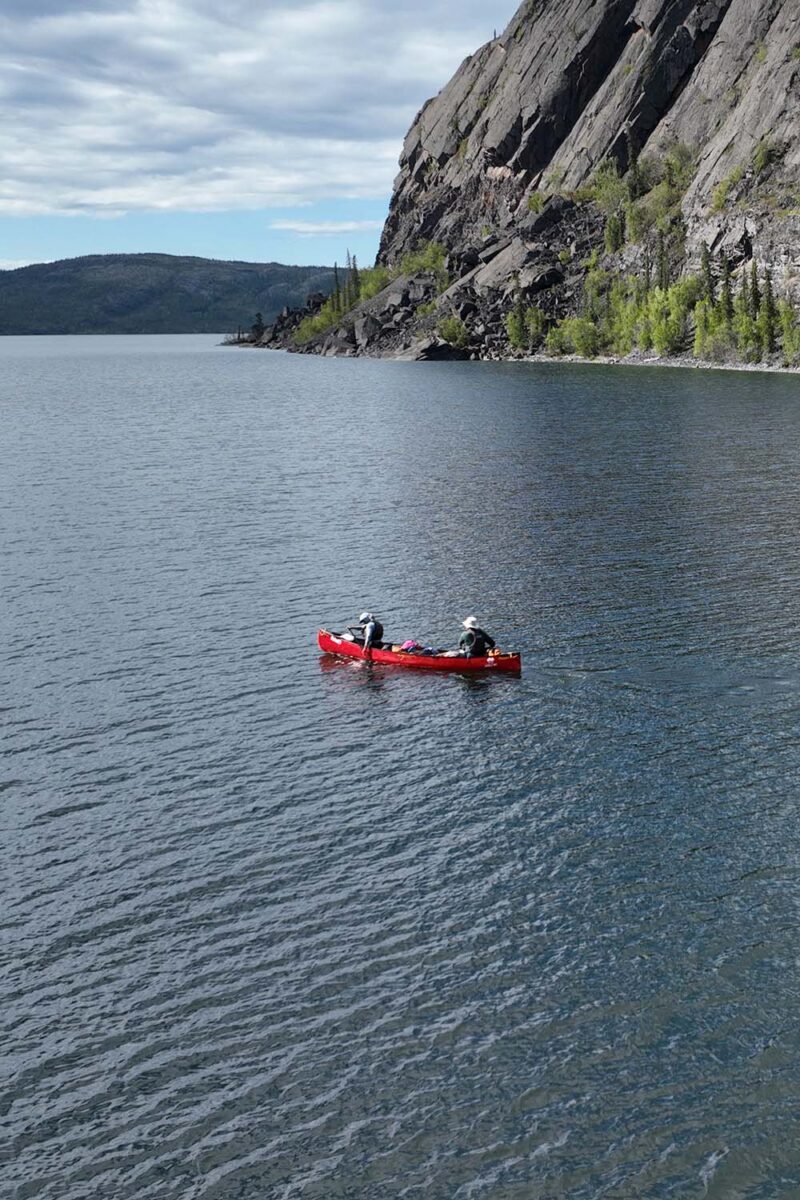
Here on the East Arm of Great Slave Lake, some of the world’s largest and best-preserved stromatolites exist and are seen only by a handful of people every year. The remoteness of this location is a part of the magic. While other geological wonders of the world draw crowds, the East Arm is still a quiet oasis for kayakers and canoeists alike.
As you paddle through these waters, you’re not just observing segments of history, but rather living on it. You will camp on some of the oldest rocks known on earth, eat dinner on stromatolite boulders the size of coffee tables and paddle next to cliffs containing billions of years of stories.
For paddlers seeking a connection to the Earth’s history and a true wilderness adventure, few places offer what the East Arm does.